

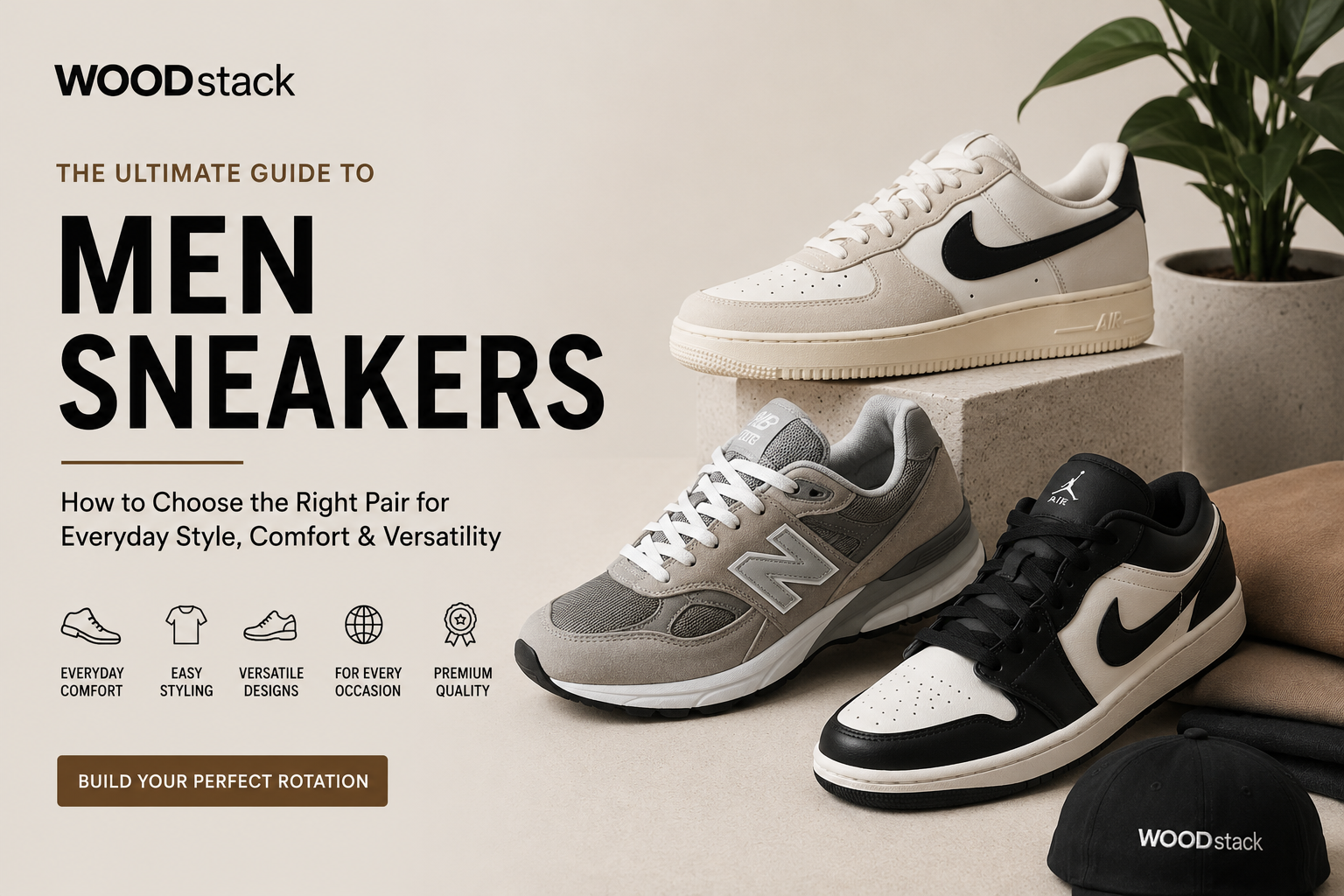
Sneakers are no longer reserved for workouts, sports, or casual weekends. They have become a core part of how men dress for work, travel, college, social plans, and everyday routines. A well-selected pair can make a basic outfit look considered without making it feel overdressed.
However, buying more sneakers does not automatically create a better footwear collection. The practical approach is to build a rotation in which every pair has a clear purpose. One sneaker may handle daily walking, another may work with cleaner outfits, while a statement pair may bring more character to streetwear looks.
The right men sneakers should support how you move, what you wear, and where you spend most of your time. This guide explains how to choose sneakers based on comfort, silhouette, color, materials, and everyday use while building a rotation that remains useful beyond one season.
Why Men Sneakers Have Become Everyday Essentials
Modern wardrobes are becoming less divided between formal clothing, sportswear, and casual wear. Men now combine tailored trousers with low-top sneakers, running-inspired footwear with relaxed denim, and basketball silhouettes with cargos or oversized layers.
Sneakers work across these combinations because they provide three practical benefits: comfort, versatility, and personal expression.
Unlike highly formal footwear, sneakers can adapt to different levels of casual dressing. The same neutral pair may work with jeans during the day and with chinos or relaxed trousers in the evening. A more technical sneaker may support long periods of walking while still fitting naturally into a streetwear outfit.
This flexibility makes men's sneakers one of the most frequently used parts of a wardrobe. The objective should not be to follow every release. It should be to find pairs that work consistently with your lifestyle.
Start With How You Actually Use Your Shoes
A sneaker may look strong in a product image but still be the wrong choice for your daily routine. Before considering color or branding, define where and how the pair will be worn.
Ask a few practical questions:
- Will the sneakers be worn for long walks?
- Are they mainly for work, college, or weekend use?
- Do they need to match several outfits?
- Will they be used in warm, wet, or cold conditions?
- Is comfort more important than making a statement?
- Does the wardrobe contain mostly slim, straight, or relaxed clothing?
These questions narrow the options quickly. Someone who spends most of the day walking will have different requirements from someone looking for a clean sneaker for dinners and smart-casual events.
The best men's sneakers are not always the most expensive or noticeable. They are the pairs that continue to get worn after the excitement of the purchase has passed.
Build a Three-Pair Sneaker Rotation
Most men can cover the majority of everyday situations with three carefully selected sneaker types.
1. The Neutral Everyday Sneaker
The first pair should be simple, comfortable, and easy to combine with different clothes. White, black, grey, navy, and beige are reliable colors because they do not compete heavily with the rest of the outfit.
A neutral sneaker can work with the following:
- Straight or slim jeans
- Chinos
- Casual trousers
- Shorts
- Joggers
- Overshirts
- Hoodies
- Basic T-shirts
- Lightweight jackets
Low-top silhouettes are usually the easiest to style. Minimal leather sneakers can create a cleaner appearance, while neutral mesh or mixed-material designs can feel more athletic.
This pair should be the foundation of the rotation. When there is no time to plan an outfit, the neutral sneaker should remain an easy choice.
2. The Comfort-Focused Sneaker
The second pair should prioritize movement. Running-inspired and technical lifestyle sneakers are useful for commuting, travel, shopping, long workdays, and situations involving extended walking.
Look for features such as the following:
- Supportive cushioning
- Flexible construction
- Breathable upper materials
- Stable heel structure
- Adequate room around the toes
- A sole suited to regular movement
Comfort is personal, so a popular silhouette is not automatically the right fit for everyone. Foot shape, arch preference, and sizing can affect how a sneaker feels after several hours.
Comfort-focused men's sneakers do not need to look like traditional gym shoes. Many modern lifestyle sneakers combine technical construction with colors and proportions designed for everyday styling.
3. The Statement Sneaker
The third pair can introduce stronger color, shape, or visual detailing. This may be a retro basketball sneaker, a chunky runner, a skate-inspired design, or a bold multi-color release.
A statement sneaker works best when the rest of the outfit is controlled. Instead of combining several loud pieces, allow the footwear to become the main visual element.
Try pairing statement sneakers with the following:
- Neutral colors and a plain T-shirt
- Relaxed denim and a solid sweatshirt
- Black trousers and a simple jacket
- Tonal clothing in similar shades
- A minimal tracksuit or coordinated set
The aim is not to make every outfit louder. The aim is to have one pair available when a basic look needs more distinction.
Understand the Main Sneaker Silhouettes
Different sneaker shapes influence the balance of an outfit. Choosing the right silhouette is as important as choosing the color.
Low-Top Sneakers
Low-top sneakers sit below the ankle and are generally the most versatile. They work with slim, straight, and relaxed trousers and can easily transition between casual and smart-casual clothing.
Clean low-tops are suitable for men who prefer understated outfits. Wider or more structured low-tops can also support streetwear styling without appearing too heavy.
High-Top Sneakers
High-tops extend above the ankle and create a stronger visual presence. They are often associated with basketball, skate culture, and streetwear.
These sneakers usually work better with straight, tapered, or relaxed trousers. The trouser hem should not create excessive bunching around the collar of the shoe.
High-tops may require more styling attention than basic low-tops, but they can add structure to simple outfits.
Retro Running Sneakers
Retro runners usually combine mesh, suede, synthetic panels, and layered sole units. They bring texture and movement to an outfit while maintaining a casual, wearable appearance.
These men's sneakers work particularly well with straight jeans, technical trousers, relaxed chinos, and athleisure clothing. Neutral retro runners can become daily footwear, while brighter versions can function as statement pairs.
Basketball-Inspired Sneakers
Basketball sneakers typically have a stronger structure and a more recognizable shape. Low-top and high-top options can both become focal points within an outfit.
They pair naturally with cargos, relaxed denim, varsity jackets, hoodies, and oversized T-shirts. Clearer colorways can also work with more minimal clothing.
Skate-Inspired Sneakers
Skate sneakers usually have flatter soles, relaxed proportions, and a straightforward casual appearance. They work well with denim, workwear trousers, graphic tees, flannels, and casual jackets.
These sneakers are useful for men who prefer a less technical and more laid-back style.
Technical and Outdoor-Inspired Sneakers
Technical sneakers often use rugged soles, layered materials, and functional details influenced by trail or outdoor footwear. They suit utility clothing, cargos, technical jackets, and modern streetwear.
The stronger construction can make them useful for changing weather and active routines, although the specific product should always be checked for its intended use.
Choose colors based on your existing wardrobe.
Color should support the clothes you already own. Buying a sneaker first and then trying to build an entirely new wardrobe around it is usually inefficient.
White Sneakers
White sneakers make an outfit feel cleaner and lighter. They work with denim, neutrals, pastels, and stronger colors. Their main limitation is maintenance, particularly when worn regularly in poor weather.
Black Sneakers
Black sneakers are practical and visually grounded. They pair easily with dark denim, cargos, monochrome outfits, and workwear-inspired clothing. All-black pairs can appear sharper, while contrasting soles or logos create more definition.
Grey Sneakers
Gray is one of the most adaptable sneaker colors. It works with black, navy, olive, beige, brown, and blue without dominating the outfit. Grey is particularly effective on layered running-inspired sneakers.
Brown, Tan and Beige Sneakers
Earthy colors bring warmth to neutral outfits. They pair naturally with cream, olive, stone, denim, and brown clothing. These shades are useful for men who want an alternative to standard black or white sneakers.
Bold and Multi-Colour Sneakers
Red, blue, green, orange, yellow, and multicolored sneakers require more control. The simplest method is to repeat one minor sneaker color elsewhere in the outfit or keep the clothing neutral.
A bold sneaker should look intentional rather than disconnected from everything else being worn.
Match the Sneaker Shape to the Trouser Fit
The relationship between sneakers and trousers can determine whether an outfit looks balanced.
Slim Trousers
Slim jeans and chinos usually work best with streamlined low-tops. Very bulky sneakers may make the lower half of the outfit look unbalanced.
Straight-Leg Trousers
Straight-leg trousers provide more flexibility. They work with low-tops, retro runners, skate sneakers, and many basketball-inspired designs.
Relaxed and Baggy Trousers
Relaxed clothing can support larger sneaker silhouettes. Chunky runners, technical sneakers, and structured basketball pairs often look more proportionate under wider trouser hems.
Shorts
Sneakers worn with shorts become more visible, so sock height and shoe proportions matter. Low-top runners, clean-lifestyle sneakers, and skate-inspired pairs are dependable options.
Instead of choosing footwear in isolation, consider the complete line created from the trouser hem to the sneaker sole.
Pay Attention to Materials
Materials affect appearance, maintenance, breathability, and how a sneaker changes over time.
Leather
Leather can create a cleaner and more structured finish. It is often easier to wipe down than mesh, although light-colored leather still needs regular care.
Suede
Suede adds depth and texture but can be more sensitive to moisture and staining. Suede sneakers are often better suited to dry conditions unless they have been treated appropriately.
Mesh
Mesh improves airflow and is frequently used in running-inspired footwear. It can be comfortable during warmer weather but may require more careful cleaning.
Canvas
Canvas is lightweight, casual, and commonly used in skate-inspired or heritage sneakers. It works well for relaxed daily outfits but may offer less structure than leather or layered synthetic designs.
Mixed Materials
Many contemporary men sneakers combine mesh, leather, suede, rubber, and synthetic overlays. This creates visual depth and may balance breathability with support.
There is no single best material. The right choice depends on climate, usage, and how much maintenance the wearer is prepared to manage.
How to Evaluate Sneaker Comfort
Comfort should not be judged only by softness. A very soft sneaker may still lack the stability or fit required for long-term use.
When trying on sneakers, check the following:
- The heel should feel secure without excessive slipping.
- The toes should have enough space to move naturally.
- The sides should not create uncomfortable pressure.
- The arch should not feel aggressively raised or unsupported.
- The shoe should flex in a way that follows the foot.
- The sneaker should feel stable when changing direction.
- The selected socks should be similar to those used during regular wear.
Feet may swell slightly throughout the day, so a fit can feel different in the evening compared with the morning. Always review the brand’s sizing information because sizing can vary between manufacturers and models.
Explore Woodstack Sneakers by Purpose
WOODstack’s men’s lifestyle shoe collection allows shoppers to browse sneakers across different brands, sizes, colors, and footwear categories. The current catalog includes brands such as Nike, Adidas, Jordan, New Balance, Converse, Vans, Puma, Reebok, Salomon, Saucony, and HOKA. Instead of browsing randomly, organize the search around a clear purpose.
For Daily Wear
Start with neutral colors and versatile silhouettes. Look for a sneaker that can work with most of the existing wardrobe.
For Long Days and Travel
Focus on cushioning, fit, breathability, and support. Running-inspired woodstack sneakers can provide a practical balance between movement and everyday styling.
For Streetwear
Explore basketball, skate, retro-running, and technical silhouettes. Stronger shapes can work with cargos, wider denim, hoodies, and layered outerwear.
For Cleaner Outfits
Choose low-top Woodstack sneakers with controlled branding and simple colors. These can complement chinos, polos, overshirts, and casual tailoring.
For Collecting and Rotation
Consider how a new pair differs from what is already owned. A useful sneaker rotation should provide more options rather than several versions of the same color and silhouette.
How to Style Men Sneakers for Different Situations
Everyday Casual
Combine straight jeans, a plain T-shirt, and low-top sneakers. Add an overshirt or lightweight jacket when layering is needed.
Streetwear
Pair relaxed cargos with a heavyweight T-shirt or hoodie. Use a structured sneaker or technical runner to support the wider proportions.
Smart Casual
Wear clean neutral sneakers with chinos or relaxed, tailored trousers. Keep the shoes in good condition and avoid overly technical or brightly colored designs.
Travel
Choose comfort-focused sneakers with breathable materials and a stable sole. Build the outfit with flexible layers that are easy to adjust.
Weekend Plans
Use retro runners or skate-inspired sneakers with denim, shorts, or casual trousers. Weekend outfits can carry more color and texture without becoming difficult to wear.
Common Mistakes When Buying Men Sneakers
Buying Only for the Trend
A trending pair may not match your wardrobe or routine. Evaluate how often it can realistically be worn before purchasing.
Ignoring Fit Differences Between Brands
The same labelled size can feel different across brands and silhouettes. Review sizing information rather than assuming every pair will fit identically.
Choosing Colour Without Considering Clothing
A strong colorway can become difficult to wear when it does not connect with the rest of the wardrobe.
Owning Too Many Similar Pairs
Several nearly identical white or black sneakers may provide less value than a balanced combination of neutral, comfort-focused, and statement footwear.
Prioritising Appearance Over Comfort
A sneaker that causes discomfort will remain unused regardless of how good it looks. Style and practicality should work together.
Ignoring Maintenance
White leather, suede, canvas, and mesh require different cleaning methods. Consider maintenance before choosing a material or color.
Caring for Your Sneakers
Regular care helps sneakers remain presentable for longer.
Remove surface dirt with a soft brush after wearing them. Use cleaning products suited to the specific material rather than applying one solution to every shoe. Avoid placing sneakers directly into intense heat because this may affect adhesives, materials, or shape.
Allow damp sneakers to dry naturally. Remove the insoles when appropriate and use paper or shoe trees to help maintain the form. Rotate footwear instead of wearing the same pair continuously, especially when shoes need time to dry after extended use.
For suede, use a dedicated brush and suitable protector. For leather, wipe away dirt carefully and apply an appropriate conditioner when required. Mesh should be cleaned gently to avoid damaging the weave.
Shop With Clear Priorities
A large footwear selection can make the buying process feel more complicated than necessary. Filters for size, brand, color, and category can help reduce unsuitable options before comparing individual designs.
WOODstack currently highlights a 30-day return option alongside safe shipping, secure payments, and customer support on its men’s footwear collection page. Shoppers should review the current return terms and product information before placing an order. Loring Woodstack sneakers, begin with the practical requirements:
- Confirm the correct size.
- Decide where the sneakers will be worn.
- Select colors that match existing clothing.
- Compare materials and construction.
- Consider whether the pair adds something new to the rotation.
- Review care and return information.
This approach turns sneaker shopping into a focused decision instead of an impulse purchase.
Frequently Asked Questions
What men sneakers are best for everyday wear?
The best everyday sneakers are comfortable, versatile, and suited to the wearer’s routine. Neutral low-tops, retro runners, and supportive lifestyle sneakers are practical options because they can work with several casual outfits.
How many pairs of sneakers should a man own?
There is no fixed number, but a three-pair rotation can cover most situations. Consider one neutral everyday sneaker, one comfort-focused pair, and one statement design.
Which sneaker colors are easiest to style?
White, black, grey, navy, and beige are generally the easiest colors to combine with different clothing. Grey and off-white can be particularly versatile because they provide a softer alternative to bright white.
Can men sneakers work with smart-casual clothing?
Yes. Clean low-top sneakers in neutral colors can work with chinos, polos, overshirts, and relaxed tailored trousers. The footwear should be clean and visually simple.
How should sneakers fit?
Sneakers should hold the heel securely while providing adequate space around the toes. They should not create pressure points or excessive movement. Fit can vary by brand and model.
Are running-inspired sneakers suitable for daily wear?
Many running-inspired lifestyle sneakers are designed for everyday styling and can provide useful cushioning for walking and travel. Always check the intended purpose and product specifications.
What makes woodstack sneakers suitable for different styles?
The WOODstack collection includes multiple sneaker brands, silhouettes, sizes, and colors, allowing shoppers to compare options for casual wear, streetwear, travel, and everyday use. Thoughts
A useful sneaker collection is built through purpose rather than quantity. The right men sneakers should match daily routines, support the feet, and work with clothing already in the wardrobe.
Begin with a dependable neutral pair. Add a comfort-focused sneaker for active days and travel. Complete the rotation with a stronger silhouette or colorway for outfits that need more impact.
By considering fit, materials, color, trouser proportions, and actual usage, it becomes easier to avoid short-lived purchases and select sneakers that remain relevant. Whether the priority is everyday comfort, clean styling, or modern streetwear, Woodstack sneakers provide options for building a more balanced and practical footwear rotation.
Share:
Men Sneakers: How to Choose the Right Pair for Everyday Style
Men’s Crew Neck Sweatshirt: The Everyday Streetwear Staple That Still Works